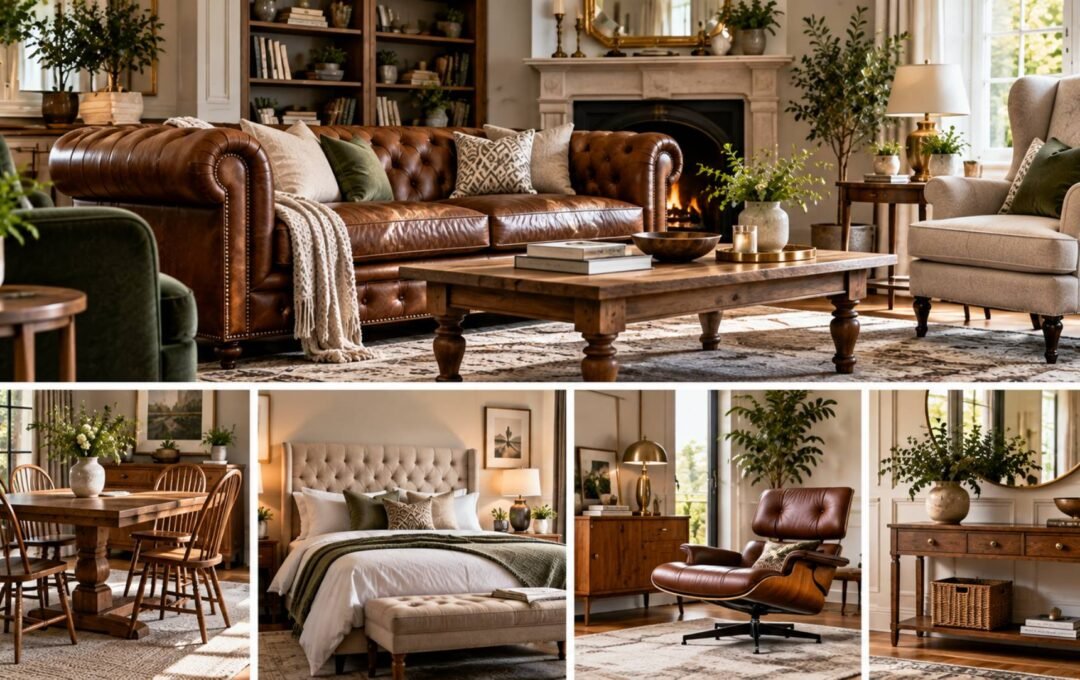
Furniture trends change quickly, but some designs remain relevant for decades or even centuries. They work because their proportions are balanced, their materials age well, and their shapes can adapt to changing interiors.
Choosing timeless furniture does not mean creating a room that feels old-fashioned. Classic pieces can sit comfortably alongside modern lighting, contemporary artwork, and newer finishes. The key is selecting furniture that has lasting visual appeal rather than depending heavily on a short-lived trend.
For homeowners who want interiors that can evolve without constant replacement, timeless furniture provides a strong foundation. Well-chosen pieces can be restyled with new fabrics, rugs, paint colours, and accessories as tastes change.
What Makes Furniture Timeless?
Timeless furniture usually has a few qualities in common. The design is recognisable without being overly decorative, the proportions feel natural, and the materials tend to improve rather than deteriorate visually with age.
Classic furniture also works across different settings. A well-made wooden dining table can suit a traditional room today and a more contemporary interior several years later.
When comparing furniture, consider:
- Quality of construction
- Natural or durable materials
- Balanced proportions
- Comfortable everyday use
- Simple, recognisable shapes
- Ability to work with different colour schemes
- Potential for repair or reupholstery
These qualities matter more over time than following whatever style happens to be popular at the moment.
Chesterfield Sofas
Few sofa designs are as immediately recognisable as the Chesterfield. Its deep buttoning, rolled arms, and substantial shape give it a strong presence without requiring a room to be traditionally decorated.
Leather versions create a formal, established look, while velvet, linen, and textured fabrics can make the same basic shape feel softer and more contemporary.
The Chesterfield works particularly well when the surrounding décor is kept relatively simple. Pairing it with a modern coffee table, understated rug, or contemporary lighting prevents the room from feeling too formal.
Its long history is one reason it is frequently included among classic furniture designs that continue to appear in modern homes.
Wingback Chairs
Wingback chairs were originally shaped with tall backs and side wings that helped protect people from drafts near fireplaces. Their practical origins produced a silhouette that remains distinctive today.
Modern versions can look very different from traditional examples. Some have slim legs and plain upholstery, while others retain deeper seats, curved wings, and decorative detailing.
A wingback chair can work as:
- A reading chair
- Bedroom seating
- An occasional living-room chair
- A feature piece beside a fireplace
- A comfortable chair in a study
Because the basic shape is so established, changing the upholstery can dramatically update its appearance without losing its character.
Windsor Chairs
The Windsor chair proves that simple furniture can have remarkable staying power.
Its familiar wooden frame, curved back, and slender spindles make it suitable for dining rooms, kitchens, hallways, and bedrooms. Traditional versions often use natural or stained timber, while painted examples can suit more relaxed or contemporary spaces.
Windsor chairs also mix easily with other furniture. They do not require a matching dining set to look intentional. A collection of similar wooden chairs around a simple table can create a relaxed interior with plenty of character.
Mid-Century Modern Furniture
Mid-century furniture continues to appeal because it combines clean lines with everyday function. Typical pieces use tapered legs, warm woods, straightforward forms, and relatively little decoration.
The style works especially well in homes where owners want character without visual heaviness.
A mid-century sideboard, lounge chair, dining table, or chest of drawers can sit comfortably within contemporary interiors because its shape is usually restrained.
Rather than filling an entire room with furniture from one period, consider using one or two pieces as anchors. This creates a collected look rather than making the room resemble a period set.
Solid Wood Dining Tables
Dining tables are among the hardest-working pieces of furniture in many homes. They host daily meals, celebrations, conversations, homework, working from home, and countless other activities.
A straightforward solid wood table rarely feels tied to one decorating era.
Oak, walnut, ash, and other quality timbers can develop character over time. Small marks and changes in colour often become part of the piece rather than making it look immediately worn out.
Simple rectangular, round, pedestal, or trestle designs are particularly adaptable because chairs can be changed whenever the room needs a different look.
Upholstered Headboards
An upholstered headboard brings softness and scale to a bedroom while remaining easy to adapt.
Simple rectangular, gently curved, or winged headboards have stayed popular because they create an obvious focal point without requiring excessive decoration.
Neutral linen and textured fabrics work well for understated rooms, while velvet and stronger colours can introduce more personality.
Unlike heavily themed bedroom furniture, a straightforward upholstered bed can evolve with new bedding, wall colours, curtains, and lighting over many years.
Traditional Wooden Cabinets
A well-proportioned cabinet, sideboard, or chest can remain useful long after its original purpose changes.
A dining-room sideboard might later become living-room storage. A chest of drawers can move from a bedroom to a hallway. A small cabinet might eventually work as a bedside table.
This flexibility is one reason solid wooden case furniture often outlasts more specialised pieces.
Traditional furniture can also work particularly well in older homes, where existing architectural character can provide a natural setting for timber, classic proportions, and established shapes.
Pedestal Tables
Pedestal tables avoid the visual complexity of four conventional legs by supporting the tabletop from a central base.
Round pedestal dining tables are particularly useful because people can sit around them without table legs restricting chair positions. Smaller versions also work well as breakfast tables, side tables, or entrance tables.
A simple pedestal shape can appear traditional or contemporary depending on the material and finish. Marble creates a more formal appearance, while timber can feel warm and relaxed.
This ability to cross design styles helps explain its lasting appeal.
Leather Armchairs
Good leather develops character as it ages, making it well suited to furniture intended for long-term use.
A leather armchair can work in a traditional study, contemporary living room, bedroom, or reading corner. The surrounding furniture determines whether it feels formal or relaxed.
Brown and tan leather remain especially adaptable because they combine easily with wood, metal, stone, wool, and many common upholstery colours.
Comfort should still come first. A beautiful chair that nobody enjoys sitting in will never become a truly successful long-term piece.
Console Tables
Console tables have survived changing interior trends partly because they solve practical problems without requiring much floor space.
They can be placed in hallways, behind sofas, beneath mirrors, or along otherwise unused walls.
Traditional versions may include drawers and turned legs, while modern options often use simple timber, stone, glass, or metal frames.
Because their function is straightforward, console tables can easily move between rooms as household needs change.
Furniture With Cane and Woven Details
Cane, rattan, rush, and woven panels have appeared in furniture for generations. Their popularity rises and falls, but the materials themselves have a long history in interior design.
Used carefully, woven details add texture without making furniture visually heavy.
A cane-backed chair, woven-front cabinet, or rattan occasional table can work with traditional, coastal, relaxed modern, and natural interiors.
The safest approach is usually moderation. One or two woven pieces often have more impact than filling an entire room with the same material.
Why Neutral Upholstery Lasts Longer Visually
Colour preferences change much faster than well-made furniture.
For expensive sofas and large upholstered pieces, neutral shades can provide greater flexibility. Cream, beige, warm grey, muted brown, olive, and similar colours can adapt to different decorating schemes.
Colour can then be introduced through easier-to-change elements such as cushions, throws, rugs, curtains, and artwork.
This does not mean every room must be neutral. A beautifully made chair in a strong colour can become a lasting statement piece. The important point is to choose colours because you genuinely enjoy them rather than because they are temporarily fashionable.
Mixing Timeless Furniture With Modern Pieces
Rooms often feel more personal when furniture comes from different periods.
A traditional wooden chest can sit beneath modern artwork. A contemporary sofa can be paired with a vintage-style armchair. A mid-century sideboard can work alongside a classic dining table.
The connection may come from colour, material, proportion, or simply careful placement.
Avoid trying to make every piece match perfectly. Interiors assembled gradually often have more character because they reflect different stages of a home’s life.
Choose Quality Before Decoration
Decorative details can attract attention in a showroom, but construction matters more over the long term.
Check whether drawers move smoothly, joints feel secure, upholstery is properly fitted, and the frame feels stable. For sofas and chairs, comfort should be tested rather than assumed.
Natural materials are not automatically superior, and expensive furniture is not automatically well made. Look at the actual construction and consider whether the piece can realistically withstand the way your household will use it.
A timeless design only delivers long-term value when it is built well enough to last.
Frequently Asked Questions
What furniture styles are considered timeless?
Chesterfield sofas, Windsor chairs, wingback chairs, solid wood dining tables, upholstered headboards, mid-century pieces, leather armchairs, and well-proportioned wooden cabinets are commonly associated with lasting interior styles.
Does timeless furniture have to be traditional?
No. Many modern and mid-century designs have remained popular for decades. Timelessness depends more on proportion, function, quality, and adaptability than on whether furniture looks traditional.
What colours are best for timeless furniture?
Neutral colours are generally easy to adapt, but there is no single required palette. A strong colour can also remain appealing when it suits the furniture and reflects the owner’s long-term taste.
Can antique and modern furniture be used together?
Yes. Combining furniture from different periods can create a layered interior. Look for common elements such as colour, wood tone, scale, shape, or material to keep the overall room balanced.
Is timeless furniture more expensive?
Not necessarily. Price alone does not determine whether furniture will last visually or physically. Construction quality, materials, comfort, repairability, and design are more useful factors to consider.
Conclusion
Timeless furniture is valuable because it gives a home continuity while still allowing the surrounding décor to change. Chesterfield sofas, Windsor and wingback chairs, solid timber tables, upholstered beds, leather seating, mid-century furniture, and classic storage pieces have endured because they combine recognisable design with practical use.
The strongest interiors do not follow one period rigidly. They bring together furniture that suits the architecture, supports everyday life, and reflects personal taste.
Choose fewer pieces carefully, pay attention to quality and proportion, and avoid buying solely because something is currently fashionable. Furniture that remains comfortable, useful, and visually appealing is far more likely to earn a permanent place in your home.